The gavel drops, and you just delivered the winning bid. Emotions run wild, and you just bought your dream property. It wasn’t by accident, though. Years of planning, and a firm understanding of the auction process, culminated into a great day at auction.
Those who plan to consider buying a land tract, and bid on a land tract at auction, must understand the nuances of tract bidding. While various auction houses do things differently, the following information is based on the process implemented by Ranch & Farm Auctions. Here’s what buyers need to know about multi-tract auctions.
Editor’s Note: This is not financial, investment, legal, or real estate advice. Consult with a financial planner, investment specialist, real estate lawyer, and real estate professional before buying or selling land at auction.
What Is a Real Estate or Land Auction?
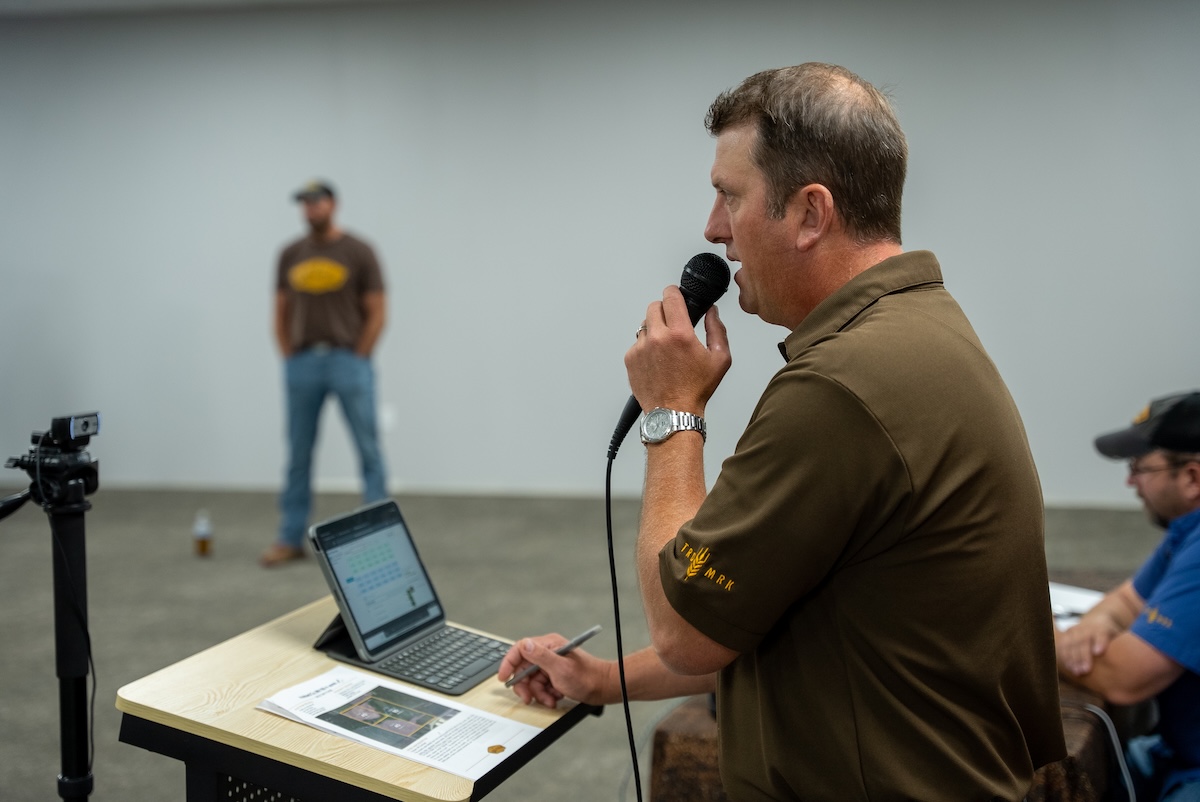
A real estate or land auction is an event with a sale that’s open to the public. The real estate or land is sold to the highest bidder. The seller puts it up for sale and bidders assemble to see who is willing to pay the highest price per acre. Whoever has the highest bid wins their tract(s) of interest.
What Is a Tract of Land?
A tract of land is complete outlining of property with a well-defined border. This is a legal term used to describe pieces of land. Each tract has property lines that show what land is within these defined areas. The sizes of tracts vary greatly, and therefore, acreage totals are clearly explained at auction. Other synonymous terms for “tract” include “lot,” “parcel,” and more.
What Is a Multi-Tract Auction?
Auctions can be structured quite differently. Generally, for large-acreage properties, these are divided into multiple tracts. So, some might inquire, what is a multi-tract auction? Simply, this is an auction where more than one tract is up for sale at the auction. Bidders can buy one, multiple, or even all of the available tracts, but they must be the high (winning) bidder to do so.
What Auction Method Does Ranch & Farm Auctions Implement?
Ranch & Farm Auctions implements a fair and easy-to-understand auction method. While there are several auction styles implemented throughout the nation, Ranch & Farm Auctions deploys the one that is fairest for all parties involved.
“Ranch & Farm Auctions sells land by the acre,” Skinner said. “When the auction starts, you're not bidding on tracts 1, 2, 3, 4, or 5. You're bidding on the land by the acre. When they drop the gavel, and say ‘sold,’ whoever that high bidder is gets their choice of those tracts. They could buy tract 1, or they could buy tracts 1-10 — at whatever that bid price was.”
According to Skinner, Ranch & Farm Auctions does not implement the “Multi-Par” method. While it’s common among other auction houses, we do things differently, and in a fairer and more transparent manner.
“Multi-par is where, at the end of the auction, you can recombine tracts and sell them again to see if they draw a higher total price,” Skinner said. “We don't do that. You have be the high bidder the first time, and in each round, to get what you want. It’s all sold the first time around. There is no going back and recombining.”

Strategies for Multi-Tract Auctions
Those planning to attend a multi-tract auction should consider key strategies. Knowing the implemented auction style can alter your auction strategy. Different tracts tend to have varied values. For example, a building lot for a home is more valuable than acreages of row crops and row crop land is more expensive than recreational and hunting lands. Thus, if you’re wanting a lower-value tract, such as for hunting, you don’t want to pay the same price as someone looking for a lot to build their home.
“You want to be the high bidder at the right time,” Skinner said. “Obviously, if a farm is split up into 1-acre building lots, 100-acre row crop lots, and 100-acre hunting lots, then those all have different values. So, you might have to lay back and play your cards right as a buyer to get the best deal. However, you run the risk of missing out, because that high bidder has his choice of buying whatever tracts he or she wants.”
While it isn’t guaranteed, most of the time, the more valuable tracts are the first ones off the board. Thus, building lots are the first to go, followed by row crop land, followed by cattle and hay ground, followed by recreational (hunting) land.
“Look at the highest and best use of the property,” Skinner said. “Is it a building lot in a desirable building area? That type of parcel is probably bringing the most money per acre. If it's ag land, especially row crop ground in a very desirable area with high-quality soils, that ground is likely bringing more money than recreational stuff.”
According to Skinner, if it has a lot of high-value timber, those prices could rival some of the more expensive tract types, such as building lots and ag ground. Thus, it’s very important for buyers to do their homework and determine the value of the property in question. Be a savvy buyer.
If marketable timber exists on the property, timber rights are sometimes sold separately. Other times, they remain attached to the land. Either way, that can greatly impact the price per acre. Of course, Ranch & Farm Auctions will make this known when advertising, marketing, and before the auction begins.
Oftentimes, bidders want to combine tracts, but not all at the same cost per acre. Those who play their cards right might be able to put several tracts together without selecting them all at once (and at the same price), though. It’s a risk, but you can attempt to buy different tracts at varied prices per acre by having the winning bid in subsequent rounds of bidding. But if you don’t have the winning bid, or you wait until later rounds to jump in, there’s no guarantee someone else won’t select one you’re interested in, though.
All said, it’s possible. Recently, one of Skinner’s clients bought land at auction and pieced together a great hunting property. He bid in multiple rounds and pieced together various lots at different prices.
“He slowly acquired all the lots he bought,” Skinner said. “He got the smaller lots first at a higher price, and as the tract sizes got larger, the price per acre went down. So, he ended up putting several tracts together to come up with a very nice recreational property with good road frontage. There's a strategy to it.”
In contrast, if all of the tracts are the same land type and value, there’s a greater chance that someone takes most or all at the same price per acre in the first round(s) of bidding. Even then, it rarely happens.
“Buyers are smart,” Skinner said. “They aren’t frivolous with their money. There are exceptions to that, though. Neighbors wanting to expand. Developers buying land. Locals keeping developers out. Keeping land in the family. Great recreational property. Circumstances and situations allow that to happen. You don't see it very often, but when you do, it's a great day for the sellers.”
All things considered, know how much you’re willing to pay per acre for the tract(s) of interest. Go into the auction with a game plan. Then, make your move with confidence.
Key Auction Factors to Remember
In addition to the above elements, there are other auction factors to remember. While not an exhaustive list, some of the following are pre-auction, at the auction, and post-auction things to keep in mind.
Pre-Auction: First, prepare your finances well before the auction. If borrowing from a lender, speak with them months before the big day. Next, determine what tracts you’re interested in buying. Consider what each tract of interest is worth to you, what you’re willing to pay per acre, and set a maximum bid. Conduct due diligence on each one, study the zoning, and ensure these align with your intended use.
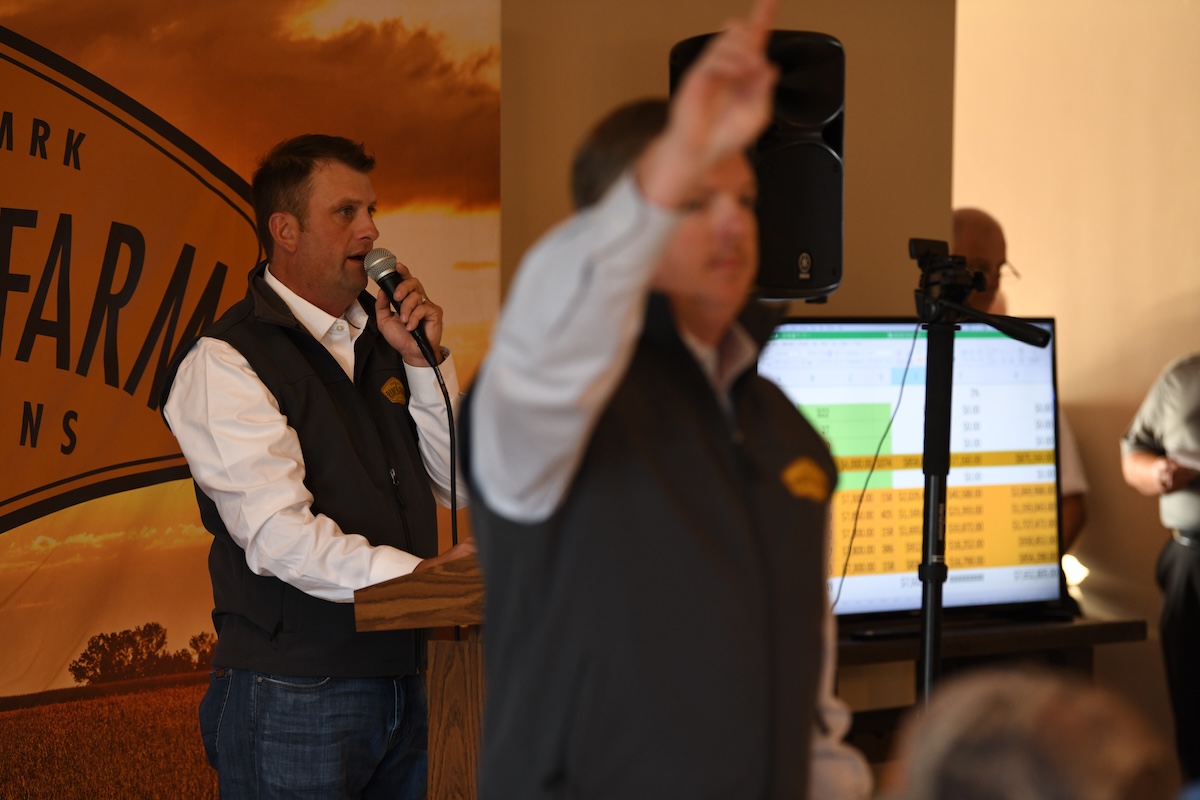
At the Auction: Once the bidding begins, things happen fast. Pay attention to the auctioneer and ringman. Keep up with the incremental bid increases. Everything is based on a per-acre basis. Whoever wins the highest price per acre gets the tract(s) of land they want. As parcels are removed from the auction board, and subsequent rounds of bidding commence, pay attention to what tracts of land remain. If one or more of these are of interest, stay in the game. Don’t be afraid to bid early but stay engaged and disciplined. Know when to bid but also remember when to walk away. If things are moving too quickly, or if you have questions, don’t hesitate to ask a ringman or other auction staff for assistance.
Post-Auction: Did you buy land at auction? Take the required follow-up steps. Follow through with the 10% down required the day of the sale. Continue on with the remainder of the contract, closing, and other associated processes. In short order, you’ll be on the land you purchased at auction. Of course, for those who didn’t have a winning bid, keep attending land auctions. The right property awaits you.
Buy or Sell Land with Ranch & Farm Auctions
For landowners looking to sell at auction, contact Ranch & Farm Auctions. We can answer questions and help with your auctioneering needs. For buyers hoping to purchase land, check out some of the upcoming Ranch & Farm Auctions near you.