
The auctioneer chants. Bidders battle in a flurry of head nods, bidder numbers, and adrenaline-spiking bid confirmations from the auction ringman. As the number rises, more bidders fall off, until eventually, it’s just you. Your final bid wins the property, and soon, it’ll start the closing process and transfer ownership of a beautiful farm. But first — the earnest money deposit.
Without question, buying property is a lengthy process. It doesn’t happen overnight. Rather, this is an ongoing process with numerous steps, including making the initial payment, which is often referred to as the earnest money or “good faith” deposit. For those unfamiliar, it’s prudent to completely understand this terminology, and all that it entails, prior to attending a land auction.
So, what is an earnest money deposit? How much earnest money is required at land auctions? Homes aside, how much earnest money is needed for land? Read on for these answers and more.
Editor’s Note: This is not financial, investment, legal, or real estate advice. Consult with a financial planner, investment specialist, real estate lawyer, and real estate professional before buying or selling land at auction.
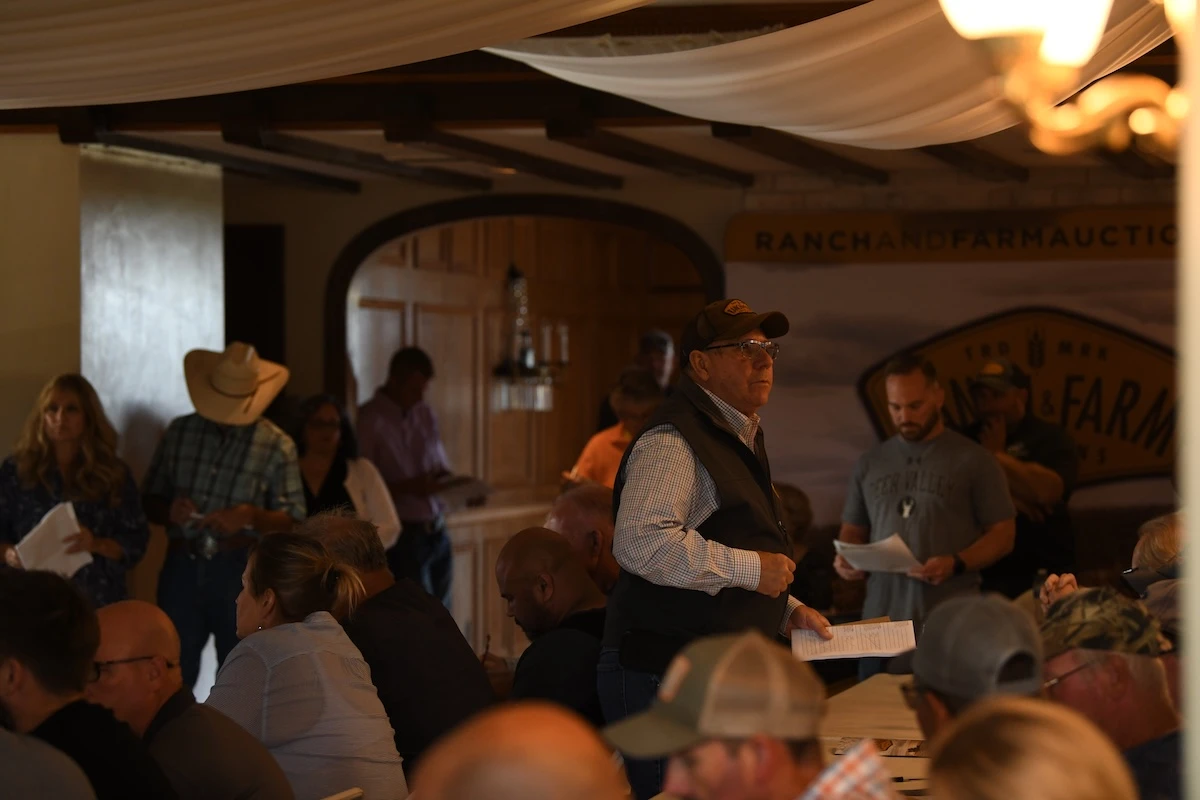
What Is an Earnest Money Deposit?
One of the first and most important elements of the auction process is paying earnest money to the auction house. Earnest money is the initial deposit required of buyers when buying real estate. Often referred to as a “good faith” deposit, this money serves as the initial commitment fee that, along with a purchase agreement, binds the buyer to the sale. It signals to the auctioneer, the seller, and other interested parties that the individual with the winning bid is a committed buyer. They are making clear that they have the necessary funds to complete the real estate purchase process.
Generally, unless the sale doesn’t go through for a reason clearly stipulated and allowed in the purchase agreement, the earnest money deposit is forfeited if the buyer backs out or otherwise can’t complete the sale. In the event the buyer breaches the contract, they might lose the deposit. (More on that momentarily.)
Do Earnest Money Deposits Work Differently with Land Auctions vs. Traditional Listings?
The earnest money deposit is a common real estate practice regardless of the method of sale. Versions of this are implemented with traditional listings and land auctions. While the concept is similar between traditional listings and land auctions, the percentages required is a much different story.
Earnest Money With Traditional Listings: Best described as earnest money, this payment might be a few hundred dollars. It could also range upward of 2-3% (sometimes more) of the purchase price. This is regulated slightly differently by location, auction house, and those handling the sale and closing process.
Earnest Money With Land Auctions: Those with a winning bid at auction must be prepared to make the day-of-sale deposit. After winning at a land auction, this payment is typically 10% of the total sum, which is the purchase price plus the buyer’s premium.
Regardless of the tally, it serves as a monetary commitment to settle the remaining balance. The pending, unpaid portion of the purchase total must be paid at closing.
What Is the Buyer’s Premium At a Land Auction?
The buyer’s premium is often confused with the earnest money deposit at land auctions. The earnest deposit is the payment and percentage of overall sum due immediately following the auction conclusion. The buyer’s premium is something else entirely. In short, this is the fee paid to the auction house.
Typically, the buyer’s premium is 10% of the total sales price. For example, a hypothetical tract of land sells for $100,000. For that property, the buyer’s premium is $10,000. Therefore, the total due from the buyer is $110,000. The earnest money paid will serve as a deposit toward that total figure.
What Payment Methods Are Acceptable for Making the Earnest Deposit (A.K.A.: “Good Faith” Deposit)?
The earnest deposit must be paid in accordance with state laws, as well as the auction terms and conditions. Different auction houses manage this differently. Generally, credit cards are not permitted. Sometimes, personal checks are allowed, situation depending. However, cash, certified checks, cashier’s checks, pre-approved wire transfers, and sometimes, other fund settlement methods, are encouraged forms of payment to satisfy the earnest money requirement.
When Do You Pay the Earnest Money Deposit After Winning a Land Auction?
Aspiring land auction bidders must understand when to pay the earnest money deposit after winning the bid at a land auction. Not being prepared can result in a list of issues, and perhaps even legal concerns.
Immediately after winning the bid, the buyer must present the “good faith” deposit. Generally, it’s required immediately after making a winning bid and the auction concludes. Once notified that you’ve made the winning bid, and the auction is over, immediately approach the auction registration desk and present an acceptable form of payment. This payment must be completed before leaving the auction venue.
If bidding online, it must be completed promptly upon the conclusion of the auction. If a representative with the auction house reaches out, complete their outlined process. Or follow the directions detailed online.

Is the Earnest Deposit Refundable?
With traditional real estate listings, the earnest deposit is typically refundable but only for a short list of reasons. These include appraisal issues, home inspection problems, financing rejections, and existing home sales contingencies. With land auctions, these typically aren’t viable refund reasons.
Making the winning bid at a land auction is a legally binding agreement to complete the sale and fulfill all requirements outlined within the terms and conditions of the auction. Unless otherwise stated, or different provisions are made and agreed upon, the earnest money deposit is required the same day as the sale.
Most auction terms and conditions outline land sales with an as-is basis. Meaning, there are no contingencies. The sale must be completed, and if full payment isn’t satisfied, the buyer is likely to forfeit their earnest deposit. Therefore, to prevent loss of the earnest deposit and subsequently the property itself, stay on schedule with your responsibilities in the closing process.
Who Holds the Earnest Money Before Closing?
The winning bidder pays the earnest money to the auction house or brokerage — not the seller. The earnest deposit is safely and securely held in escrow until the closing date. Usually, this is a secure, third-party escrow or trust account. At closing, the earnest deposit paid on the day of the sale is applied toward the total purchase price.

Reading the Terms and Conditions with Ranch & Farm Auctions
Aspiring land buyers should always read the terms and conditions before attending the auction. These clearly state the entire outline of the real estate auction, including acceptable forms of payment, expected earnest deposit percentage, and much more. If unsure about anything within these guidelines, contact Ranch & Farm Auctions with questions. If on the day of the auction, ask an auction representative for clarity.
For landowners looking to sell at auction, contact Ranch & Farm Auctions. We can answer questions and help with your auctioneering needs. For buyers hoping to purchase land, check out some of the upcoming Ranch & Farm Auctions near you.