Crop share leases have never been more common than they are today. The number of existing farm leases continues to rise each year. Therefore, it’s never been more important for aspiring landowners to understand farmland lease types. Read on to learn more about cash rent vs. crop share, plus understanding the existing farm leases on available land before bidding on them at auction.
Editor’s Note: This is not financial, investment, legal, or real estate advice. Consult with a financial planner, investment specialist, real estate lawyer, and real estate professional before buying or selling land at auction.
Agricultural Cash Rent vs. Farmland Crop Share
Agricultural Cash Rent: Agricultural cash rent is a rental agreement between a landowner and farmer. The farmer pays the landowner a fixed rate per acre. This is a predetermined sum of money that secures the farming rights for a specified period of time. This is the most common route, as opposed to farmland crop shares.
Farmland Crop Share: A farmland crop share is an agricultural lease agreement between a landowner and farmer. These individuals agree on a percentage-based sharing of production costs and crop harvest totals. This is a common alternative to agricultural cash rents.
Step 1: Assessing Core Financial Structuring of Farm Leases
The first step in understanding an ag cash rent is assessing the core financial structuring of farm leases. This involves studying property acreage characteristics, fixed payments vs. percentage payments, input cost sharing, revenue variability, government subsidy program payments, crop insurance payments, and more.
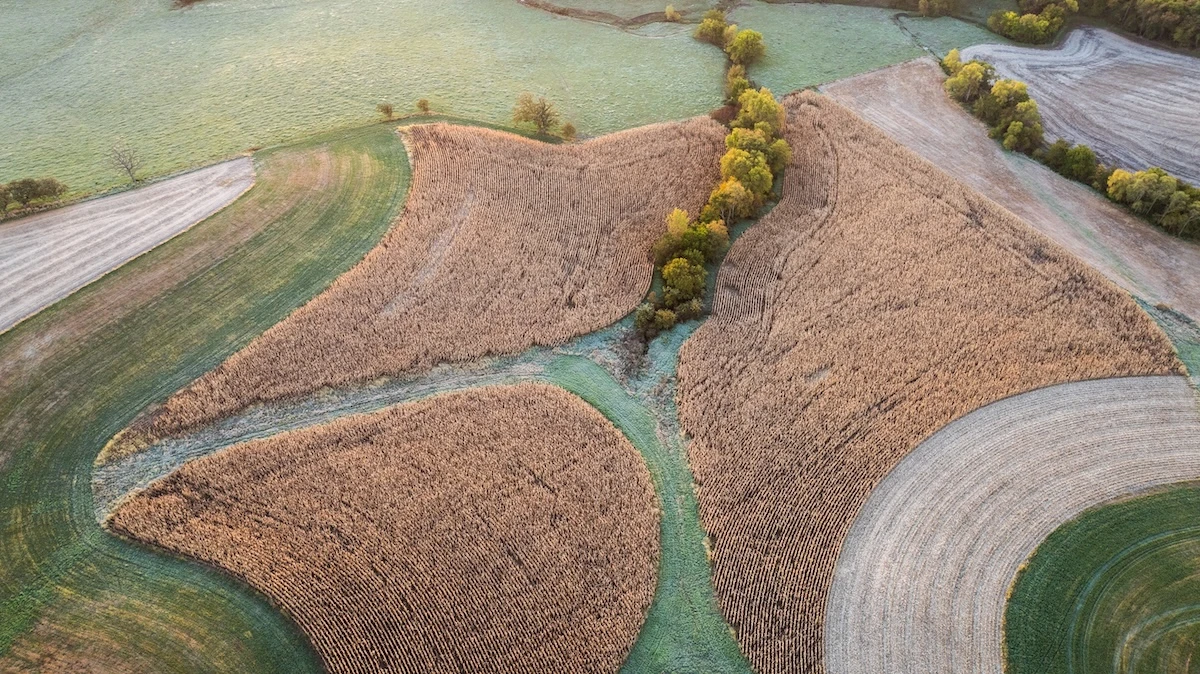
Property Acreage Characteristics: Irregular field shapes or obstacles impact operational efficiency and should adjust rental values regardless of the current lease price.
Fixed Payments vs. Percentage Payments: Cash rent requires a set dollar amount per acre, whereas crop share splits the actual harvested yield (e.g.: 1/3 to the landowner and 2/3 to the tenant).
Input Cost Sharing: Cash rent places 100% of input costs on the tenant; crop share divides input costs (seed, fertilizer, chemicals) proportionally between both parties involved.
Revenue Variability: Cash rent provides predictable income for the owner, while crop share fluctuates based on market prices and annual production.
Government Subsidy Program Payments: Cash rent tenants typically receive all program payments (like ARC or PLC), whereas crop share participants split these subsidies.
Crop Insurance Payments: Cash rent tenants claim all insurance payouts. Crop share partners split payouts relative to their share percentage.
Step 2: Analyzing Risk vs. Reward Profit Distribution
The second step in understanding an ag cash rent is analyzing risk vs. reward in profit distribution. This involves crop production risks, market sales risks, crop profit floors and ceilings, crop loss protections, etc.
Crop Production Risks: Cash rent places all weather and yield risk on the tenant. Crop share distributes production risk between owner and operator.
Market Sales Risks: Cash rent shields the landowner from commodity price drops, while crop share ties owner revenue directly to the market value at sale.
Crop Profit Floors and Ceilings: Cash rent lets the tenant keep all revenue above the fixed rental cost. Crop share limits upside potential for the tenant but rewards strong harvests for the owner.
Crop Loss Protections: Modern crop insurance mitigates total failure for cash tenants, but poor harvest years still severely reduce crop share returns.
Step 3: Examining Crop Management, Planning, and Oversight
The third step in understanding an ag cash rent is examining crop management, planning, and oversight. This phase includes hammering out operational authority and freedom, required time commitments by party, required maintenance commitments by party, necessary agricultural knowledge to operate, current farm lease status and timeline, and more.
Operational Authority and Freedom: Cash rent grants the tenant full control over field decisions. Crop share requires joint decision-making and frequent communication.
Required Time Commitments by Party: Cash rent demands minimal oversight from the landowner. Crop share requires active management and tracking of inputs and grain marketing.
Required Maintenance Commitments by Party: Existing leases must clarify who maintains drainage tiles, terraces, waterways, and fences.
Necessary Agricultural Knowledge to Operate: Cash leasing requires little hands-on farming knowledge from the owner, whereas crop share requires familiarity with agronomic practices and input pricing.
Current Farm Lease Status and Timeline: Crop share arrangements help landowners meet the "actively engaged in farming" definition for specific federal program rules.
Step 4: Estimating Profit, Tax, and Legal Factors
The fourth and final step in understanding an ag cash rent is estimating profit, tax, and legal factors. (Consult a qualified attorney with questions and concerns.) This phase features questioning crop yield potential and outcomes, tax implications, payment timelines, tenant vetting, etc.
Crop Yield Potential and Outcomes: High-fertility, tiled acreage often commands higher competitive cash bids, while variable ground may favor shared risk structures.
Tax Implications: Cash rent income is treated as passive rental income, while crop share revenue can be subject to self-employment taxes.
Payment Timelines: Cash rent is traditionally paid in installments (such as spring and fall) or upfront. Crop share returns are realized post-harvest upon grain sale.
Tenant Vetting: Cash rent relies primarily on the tenant's financial ability to pay the fixed rate, whereas crop share requires verifying trustworthiness and prompt bill-sharing.
When Existing Agricultural Leases Might Help Property Value
There are times when existing agricultural leases might help property value. Some of these include:
● When buyers are looking to continue leasing the land out to other farmers.
● Standing crops with great production on display.
● Existing leases showcase the current (good) fertility and productivity of the soil.
● An existing long-term lease provides potential buyers with reliable income and cash flow.
● Maintaining a desirable tax status (for taxes, zoning, etc.)
● Immediate need for income to lower holding costs (e.g.: property taxes, liability insurance, etc.)
● Increasing appeal to buyer partners, investors, and even bank lenders.
● Establishing regular land stewardship for absentee landowners.
When Existing Agricultural Leases Might Hurt Property Value
There are times when existing agricultural leases might hurt property value. A few of these include:
● When buyers are looking to cease the lease and farm the property themselves.
● Standing crops with poor production on display.
● Existing leases showcase the current (poor) fertility and production of the soil.
● Automatic renewal clauses that limit the power of potential buyers.
● Stronger state and local tenant rights that limit the power of potential buyers.
● Mineral rights conflicts.
● Surface water rights conflicts.
● Additional land use conflicts.
● Below-market rental rates on the property in question.

Contact a Ranch & Farm Auctions Land Specialist Today
There are many reasons for Ranch & Farm Auctions to represent you when selling land, just as there are great reasons to attend one of its auctions when looking to buy. For the latter, always ask the right questions, and find desirable properties, before bidding at auction. Contact a Ranch & Farm Auctions Land Specialist with any questions you might have about your land buying needs or regarding specific upcoming auctions.
For landowners looking to sell at auction, contact Ranch & Farm Auctions. We can answer questions and help with your auctioneering needs. For buyers hoping to purchase land, check out some of the upcoming Ranch & Farm Auctions near you.