Is it OK to consider buying land without a survey? Or should you always complete a property survey before buying land? What are the differences in fence lines vs. property lines? What are expected survey costs for farms? These are all valid questions. Read on for the answers to these and many more. Here’s how to verify property lines before bidding on land at auction.
Editor’s Note: This is not financial, investment, legal, or real estate advice. Consult with a financial planner, investment specialist, real estate lawyer, and real estate professional before buying or selling land at auction.
The Importance of Knowing Property Lines
Those planning to bid on land at auction must verify property lines before doing so. But those new to the real estate landscape, and many aspiring buyers, don’t know how to verify property lines. This raises the question — how do you know where the borders are located? If prospective buyers can’t answer that question, they can’t complete their due diligence.
“It's very important to know where the lines are at, and to know what you're getting into, especially if there are any encumbrances or encroachments — things like that,” said Josh Miller, a Whitetail Properties and Ranch & Farm Land Specialist in Minnesota. “That’s especially true if you're buying in a neighborhood that you aren’t familiar with.”
Buying Land With a Land Survey
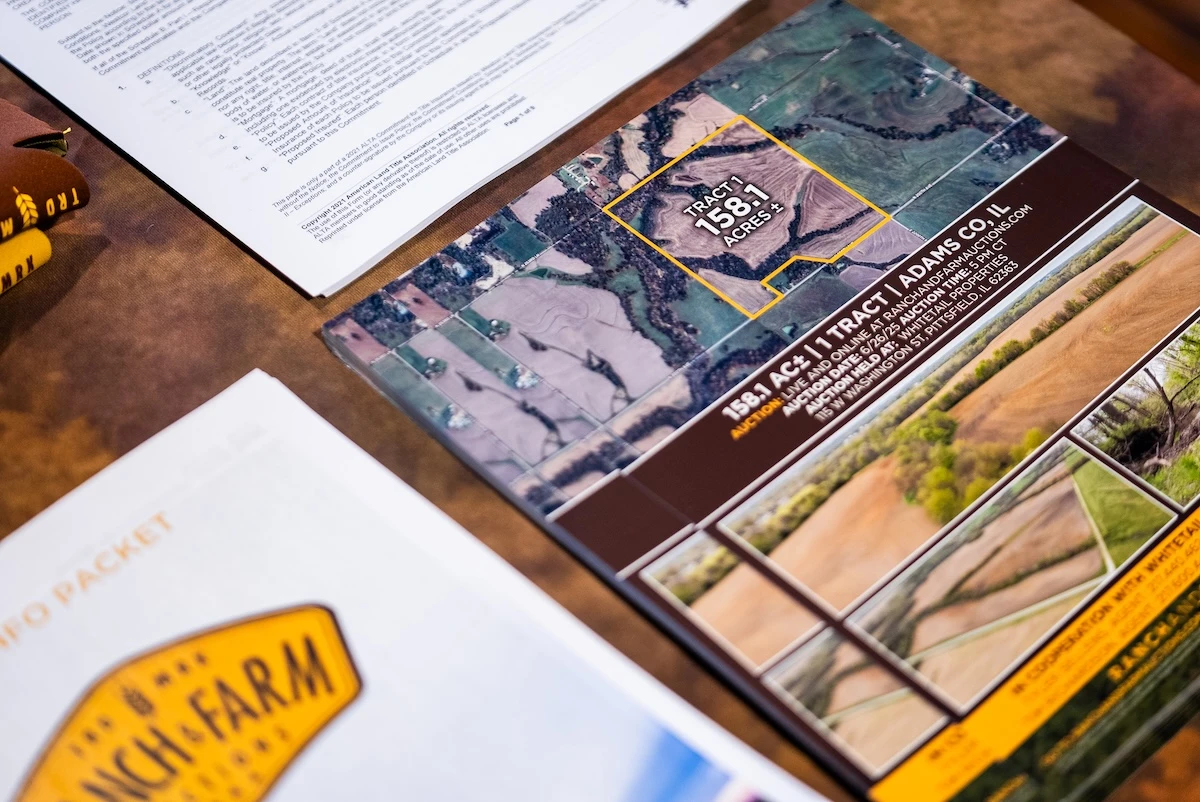
The best practice is buying land with an attached land survey. But researching property lines can be stressful. Seeing if there is a current and accurate survey isn’t always simple. Fortunately, there are multiple ways that individuals can verify the accuracy of property lines. The most effective method, and only official manner, is a certified land survey, though.
“We always see if there is a recorded survey, or if the landowner has one on file,” Miller said. “Sometimes, we check with various survey companies to see if there's anything that we might not have previously known about.”
Of course, working with a Land Specialist takes the hassle out of this process. They do the research for you.
Buying Land Without a Property Survey
When land surveys aren’t available, or when survey prices extend beyond budgets, some might wonder if buying land without a property survey is acceptable. Naturally, the best case scenario is to always have a recent land survey on file. That said, some still ask the question if you can buy land without one. In short, yes you can.
“We sell land all of the time without surveys,” Miller said. “In fact, surveys aren't really that common in a lot of counties that I work in. Generally, fence lines, field lines, ditches, and roads are what you go off of.”
Of course, some properties, and overarching geographical areas as a whole, are in greater need of land surveys. Properties and general areas where clear boundaries aren’t apparent, fit that bill. Furthermore, fresh surveys tend to be more common with auctions than traditional listings.
“There are certain counties where there are just not a lot of established points to go off of,” Miller said. In these situations, an official survey becomes more important.
Alternative Means of Gauging Property Lines
There are alternative means of gauging property lines for farms of interest. Miller says that, if there isn't a survey on file, then they often request one. This is especially true with unclear property lines and known discrepancies. Other methods can be implemented to gauge lines, though.
“Sometimes, we can go off of county GIS maps, handheld land-centric applications on our phones, and more,” he said. “However, sometimes these are accurate, and sometimes they are not. So, it really depends on how comfortable we are with what the lines look like in person — whether there are established fence lines and other clear boundary markers like that.
“A survey is obviously the best method to analyze property lines,” Miller continued. “But you can use Land ID on your phone to give you an idea of where things are at and see how accurate lines are.”
Of course, there might be slight discrepancies. Pay extra attention to the details. As land apps might show that a particular fence line is on or just across the line. Sure, particular applications can sometimes give you a sense of comfort. Then, you can follow through with that. But if it seems off, a land survey is obviously the best way to address issues.

Fence Lines vs. Property Lines (And Other Common Issues)
Those in the market to buy land should know about common issues and pitfalls with property lines. While uncommon, buyers might run into challenges that they might need to address. One such example is that fence lines aren’t always accurate property lines.
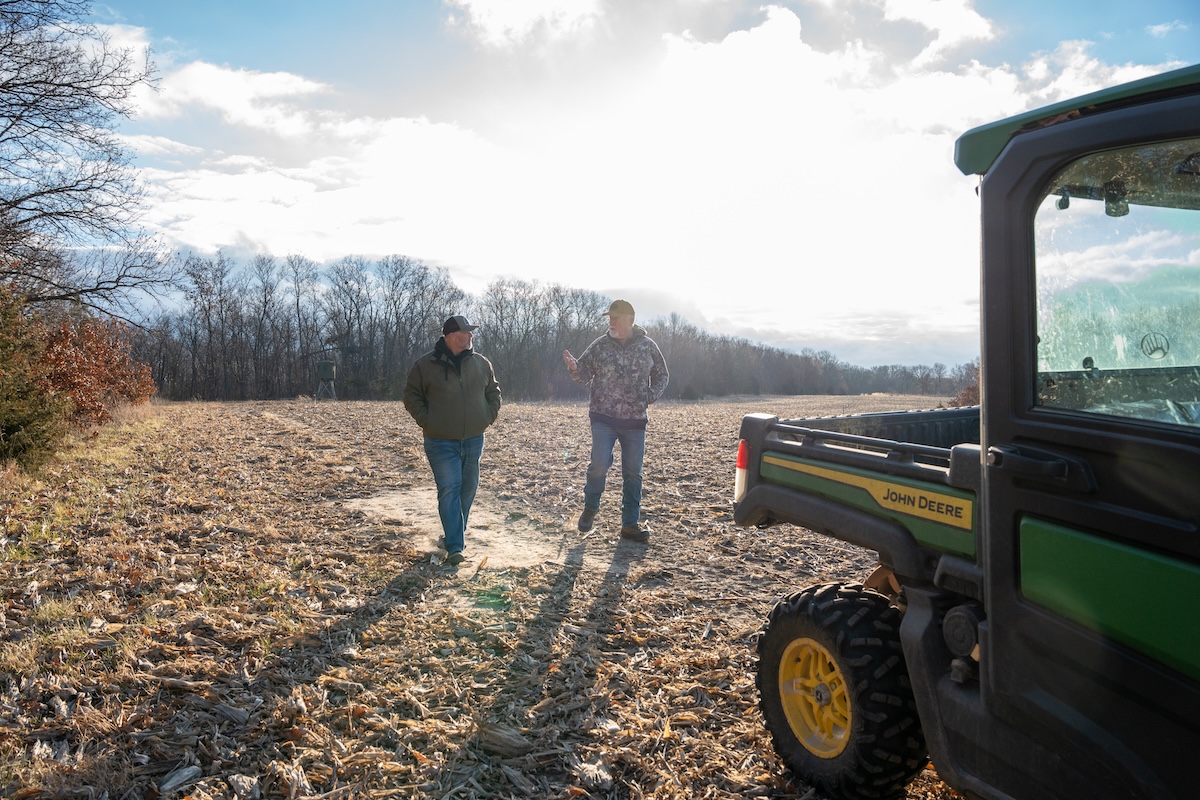
“Fence lines can be off,” Miller said. “There might be a neighbor who has built a building over the line and onto your property. There might be deer stands that are hugging a line. Some guys' food plots could be off. So, there are a lot of things to look at when you're walking the perimeter of a property.”
Fences aside, other examples of potential issues might be buildings that cross over the line. Another is waterways that serve as boundary markers, but which are shifting over time due to erosion. (Just look at large rivers, such as the Mississippi River, where state lines oftentimes extend across to opposite river banks, or further, due to river migration.) These are things that must be assessed by property surveys.
Survey Costs for Surveying Farms
As for the cost of real estate surveys, it isn’t a cheap service to employ. In fact, it often costs as much or more than closing costs on small- to moderate-sized farms. Sellers and buyers planning to pay that bill should be aware and anticipate it.
“Properties that are more challenging to survey tend to cost more to have that service completed,” he said. “So, expect to pay more for challenging terrain, steep topography, and other cumbersome factors.”
According to Miller, it can range anywhere from $2,000 to $8,000-plus, depending on how precise they are and how much work is needed to complete the land survey. When property lines are more convoluted, there are more points of reference, and more details are required in the legal property descriptions, it can become quite pricey. Obviously, total acreage impacts the cost of property surveys as well.
“Of course, size definitely matters,” Miller said. “Smaller plots are obviously cheaper. Larger lots with more stakes and points of reference are more expensive.”
Buying and Selling Land at Auction With Ranch & Farm Auctions
Those interested in buying or selling land at auction should contact Ranch & Farm Auctions. With us, you don’t have to stress about property borders. We take care of that for you. “It’s just one of the things we look for when checking out a property,” Miller said.
Should problems arise, inspect what the neighbors are doing around the borders. But it’s important to know that most issues are likely completely innocent. In fact, few people check property lines more than hunters. Everyday landowners don’t pay quite as much attention to it.
Even so, it’s crucial to conduct due diligence to determine what current owners are doing, as well as what neighbors are doing, to ensure no one is encumbering on another. If they are, address the situation with kindness and respect. Consult a Land Specialist. If needed, hire a mediator or lawyer. Being respectful resolves far more issues, and notably faster, than introducing ugliness and hate into a situation.
In summary, work with a Whitetail Properties and Ranch & Farm Auctions Land Specialist to assist with your property line and auction needs.
For landowners looking to sell at auction, contact Ranch & Farm Auctions. We can answer questions and help with your auctioneering needs. For buyers hoping to purchase land, check out some of the upcoming Ranch & Farm Auctions near you.